
IMPRINT
Every royalty statement for your press,
in about a minute.
Imprint imports your sales reports from fourteen channels, applies each author's contract terms, and produces statements you can send. It runs on your computer. Your data never touches ours.
Mac and Windows. Full functionality for thirty days. No card required.
Helping Indie Authors and Publishers
ROYALTIES
The Problem
If you publish through more than one channel, you already know how the royalty run goes.
Nine reports in six formats. Sales in five currencies at rates you have to look up. A spreadsheet you built yourself two years ago, which mostly works, and which you don't entirely trust. Somewhere in there, an anthology with four contributors on different splits, and an author whose rate changed last March.
It takes a weekend. You put it off. And the longer you put it off, the more it costs to catch up.
That's the job Imprint does.


Imports from everywhere you sell
Amazon KDP · ACX · IngramSpark, print and ebook · Lightning Source · Draft2Digital, ebook and print · Kobo · Kobo Plus · Apple Books · Google Play · Google Audio · Barnes & Noble Nook · PublishDrive · Authors Republic · Findaway and inAudio · DriveThru
Drop the files in. Imprint reads each format, matches titles and editions by identifier rather than by name, and converts every currency into yours using the rates from your own KDP payment files rather than whatever today's rate happens to be
Direct sales too. Kickstarter, Shopify, conventions and table sales, either through the POS entry or as a bulk import from a template, so your own income sits alongside your retail income instead of in a separate spreadsheet nobody reconciles.
When a retailer changes their export format, the mapping updates arrive in the app. No reinstall.
Handles the royalty terms a spreadsheet can't
Set each contract once and Imprint applies it, correctly, every month.
Royalty basis per edition. Percentage of retail on print, percentage of net on ebook and subscription income, whichever combination your contracts actually say. Fixed RRP applied consistently across markets, in GBP, USD, EUR, CAD or AUD.
Rates with effective dates. Improving an author's terms applies from the day you agreed it, rather than silently rewriting what you owed them last year.
Tiered and escalating rates. The rate rises automatically as cumulative units pass each threshold, without you having to remember which titles are close.
Anthology and multi-contributor splits, configurable per format, because the print split and the audio split aren't always the same argument.
Advances per contributor, with recoupment. Earnings pay down the advance before anything becomes payable, and a negative period carries forward automatically instead of resetting.
Minimum payment thresholds. Small balances accrue until they're worth paying, rather than generating a $1.40 transfer and the bank charge that goes with it.
Print returns reserve. If you allow returns, hold print royalties for three, six or nine months so a late wholesale return doesn't have to be clawed back from an author you've already paid. Released automatically, and itemised on the statement so the author can see exactly what's held and when it's coming.

Tells you when something's about to go wrong
This is the part that's hard to build yourself, and it's the part that saves real money.
Negative margin alerts. If a discount would put a title underwater, Imprint says so before you run the promotion rather than after.
Rights expiry and reversion risk. Contracts approaching term get flagged while you still have time to do something about them, instead of surfacing during a tidy-up two years later.
Orphan edition detection and author aliases. Before anything is calculated, Imprint catches editions that didn't match and authors whose name came through differently on one report. That's the step everybody skips, and it's the one that produces confidently wrong numbers.
Statements your authors can actually check
Branded PDFs on your own template, in either a summary format or a full detailed audit.
Held and released reserves, advance recoupment and threshold balances all shown explicitly, so an author looking at a smaller number than they expected can see why without having to email you.
PayPal Mass Pay files for bulk payment. Batch email straight from the app, so thirty statements go out in one action instead of thirty.
Behind all of it, a Master Ledger with a line-level audit trail for every figure on every statement. When someone queries a payment from eighteen months ago, you can answer them.

Shows you what's working
Profit and loss per title, with your production costs logged against the income, so you know which books earned out and which never will.
Cash flow forecasting against vendor payment terms, so you can see what's due and when rather than waiting to find out.
Analyze years of history in an instant. Identify which marketplaces, titles and formats are the ones that really make you money, so that you can adjust your marketing.
Why local matters, and what it costs when it doesn't
I built Imprint because the software I ran my own press on became abandonware in 2019. The data was still mine, technically. Getting it out into a usable shape took months.
So Imprint runs entirely on your machine. Your database is encrypted on your own disk and decrypted only while the app is open. There's no account, no server holding your figures, nothing to leak and nothing to sell. The only thing the app asks our server for is updated mappings when a retailer changes their export format.
Which happens more often than you'd think.
In July, ACX rearranged their royalty statements. Their new model split the detail across two tabs, and the tab everyone had been reading from no longer contained all the money. On my own statement, 59% of the month's royalties were in a tab that hadn't existed the month before. 99 units sold, 38 visible.
Nothing errored. The numbers were simply wrong, quietly, by about two thirds.
I found it, fixed it and shipped the update within the hour. Anyone running a spreadsheet pointed at the old tab underpaid their authors in July and still doesn't know.
That's what the mapping updates are for. Fourteen connectors (currently) that can change without notice, and someone whose job it is to make sure it doesn't affect your data.
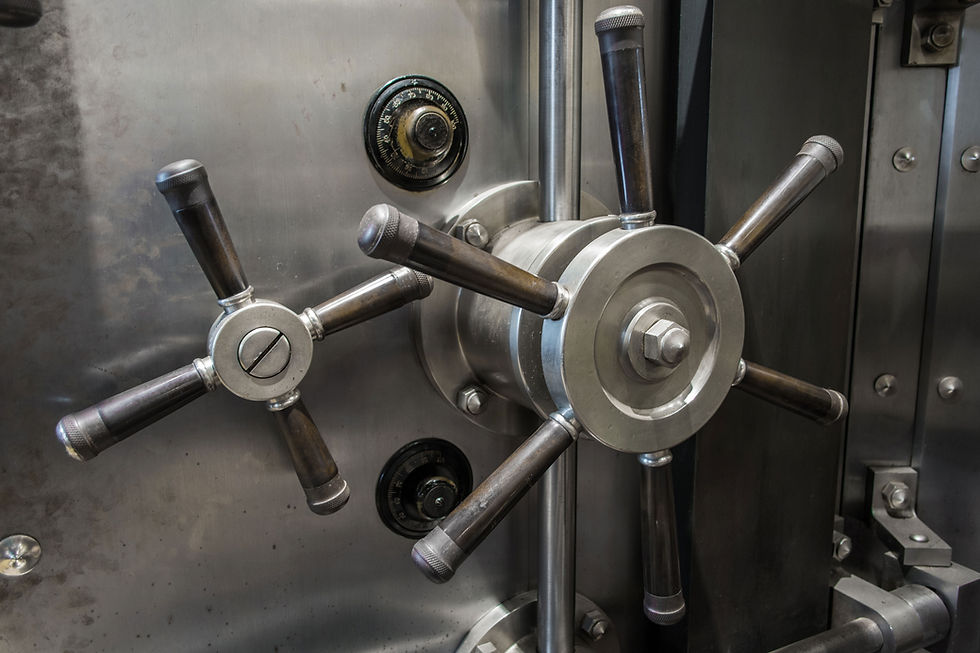
What happens if your laptop dies?
Local storage raises a fair question, so here's the answer.
Imprint writes an encrypted backup every time you close it. You get a Data Recovery Key at setup, which is what gets you back into your vault if everything else is gone. Restoring onto a new machine is pointing the wizard at the backup file.
It also survives a macOS password reset wiping your login keychain, which is the failure that catches people out with locally encrypted apps and which we specifically built for.
Keep the recovery key somewhere safe. We can't recover it for you, because if we could, the encryption wouldn't mean anything.
What happens if you don't buy?
The trial runs for thirty days with everything switched on.
After that, Imprint doesn't lock you out. Your data stays on your disk. You can still generate statements, still export everything, still open the app whenever you like. What stops is adding new data: imports, POS, bulk spreadsheets, and new authors and titles.
Nothing you've entered is ever held hostage. That's rather the point of the thing.

What people using it say
I entered the 2026 data to give it a try then started working backwards. I entered ten years of data in a few hours. I found this software useful not only for royalty statements but for seeing long term trends. (Much easier to see than in Quickbooks or spreadsheets) I am now considering changing my marketing strategies as a result. - Darlene Cypser, Foolscap & Quill
I highly recommend Moonstruck and their Imprint Royalties software to any small or medium-sized publisher that wants to reduce the amount of time and resources spent on administration while simultaneously increasing their insight into their own business in terms of sales trends, profitability, and expenses. This software is very reasonably priced and will pay for itself many times over in saved time and resources, with the added bonus that it also allows you to track overall and individual title profitability and expenses. - Mitch Mader, Downingfield Press
Pricing
One application, two ways to pay for it.
Imprint Royalties — $157 The software licence, yours permanently, plus twelve months of mapping updates. After the first year, updates are $35 a year if you want them. If you don't, the app carries on working exactly as it does the day they lapse. You just won't get the fix the next time a retailer moves the goalposts.
Imprint Royalties, lifetime — $397 The same application, with every mapping and feature update for as long as it exists. For people who would rather pay once and never think about it again.
There is no cut-down edition. Both are the whole thing.
Payments handled by Lemon Squeezy. Prices in USD.

Who's behind it?
My name's Graeme Reynolds. I've run a small press called Horrific Tales Publishing since 2011, and I write horror novels, including the High Moor trilogy.
The royalty run was the worst weekend of my month. Reports from everywhere in different formats, currencies to reconcile, and a spreadsheet held together with hope. Even with that spreadsheet it took hours, and I was never quite certain the numbers were right.
The other half of it is that I'm an author as well as a publisher, and I've seen what happens when presses get this wrong. Most of them aren't dishonest. They're behind, they've lost track, and by the time anyone notices there's money owed that nobody can account for. To the author waiting on it, those two things look identical.
So I built the tool I needed. It imports everything in one go, sets the exchange rates from the payment files, and generates the statements with a single click.
If it saves you the weekend it saves me, it's done its job.
Everything it does
For anyone who'd rather see the whole list before deciding.
Royalty models Percentage of net · percentage of RRP · basis set per edition · fixed RRP across markets · effective-dated rates · tiered and escalating rates by cumulative units · anthology and multi-contributor splits per format · per-contributor advances with recoupment · negative periods carried forward · minimum payment thresholds · print returns reserve at 3, 6 or 9 months
Money Multi-currency in GBP, USD, EUR, CAD and AUD · FX rates taken from your KDP payment files · vendor payment terms · cash flow forecasting · negative margin alerts · per-title profit and loss with production costs · Master Ledger audit trail
Data in Fourteen connectors · direct sales via POS entry or bulk template import · orphan edition detection · author alias management · mapping updates without a reinstall
Statements Branded PDF on your own template · summary or full audit format · reserves, advances and thresholds itemised · PayPal Mass Pay export · CSV export · batch email via internal SMTP
Contracts and rights Terms stored per contract and per edition · rights expiry and reversion risk alerts
Data safety AES-256 encrypted local vault · decrypted only while running · Data Recovery Key · automatic encrypted backup on close · restore to any machine · survives a macOS keychain wipe · no cloud storage, no account, no telemetry